Non-recognition of statelessness or refugee status: what are the stakes for Palestinian people?
Aude Martenot, Coordinator of the West Switzerland ODAE
Two international treaties aim to protect refugees and/or persons without nationality. For the latter, the 1954 Convention relating to the Status of Stateless Persons (CSSP) applies, with the objective of regularizing the legal status and residence of individuals expelled from their country who are not considered refugees. Thus, the CSSP affirms that everyone has the right to a nationality. Because, regardless of the reason that led a person to be stateless, the consequences of this absence are always a restriction of rights.[1]ODAE romand, Living Without Recognized Nationality. Statelessness as a Consequence of Political Denials, Panorama n°7, December 2024, odae-romand.ch. Switzerland ratifies the CSA in 1972.
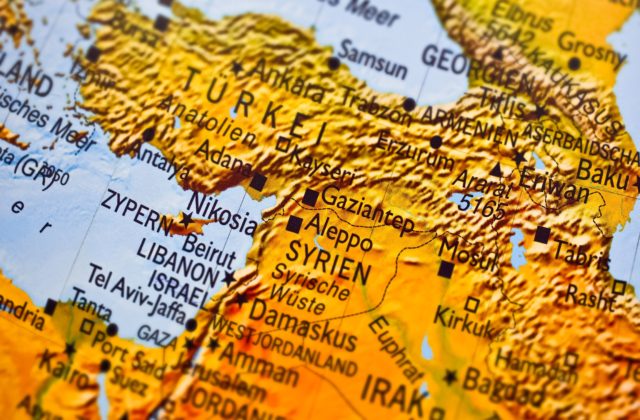
Cover image credits: Alfo Medeiros on Pexels.
Palestinian individuals (from the West Bank, Gaza, Syria, Jordan, or Lebanon) seeking asylum in Switzerland are registered in their database as «stateless» by the State Secretariat for MigrationSEM), the Swiss government does not recognize the existence of the State of Palestine. For them, the issue of recognizing stateless status therefore arises quickly. Since UNRWA can no longer fulfill its mission, their access to the procedure is facilitated.[2]Access to stateless status for Palestinian individuals has evolved in recent years, particularly in connection with UNRWA's capacity to ensure minimal living conditions… Read more.
In a landmark ruling[3]ATAF 2014/5.4, the Federal Administrative CourtTAFhas decreed that submitting an asylum application does not exclude submitting an application for statelessness. The authorities recall, in fact, that both asylum and statelessness applications must be examined and, if applicable, recognized, as each represents an interest worthy of protection. [4]See: SEM, Manual Asylum and Return, F4 Request for recognition of stateless status.. In practice, the SEM – responsible for evaluating both applications[5]Unlike an asylum request, the appeal process for a statelessness decision does not stop at the Federal Administrative Court but can continue before the Federal Tribunal (SEM, Manual ... Read more – generally processes asylum applications as a priority, contrary to the recommendations of HCR[6]UNHCR, Statelessness in Switzerland. Summary and Recommendations, November 2018.
Social Rights and Statelessness
Statelessness grants social rights similar to refugee status regarding residence permits, access to employment, freedom of movement in Switzerland, and freedom to choose one's place of residence. Travel is made possible by obtaining a passport for non-nationals, however, this document is poorly recognized internationally.[7]Same here..
Even if the right of access and the amounts of social benefits are the same for refugees and stateless persons, it is still necessary for administrative staff to be informed of this. As statelessness is a little-known status, it is sometimes necessary to fight to have one's rights respected: Originally from Palestine and recognized as stateless in August 2025, Mona* and Skandar*[8]ODAE novel, case no. 531, odae-romand.ch requesting social assistance from the cantonal social services. Their request is denied, with the person in charge of their case informing them that stateless persons are only entitled to emergency aid. Supported by a representative, Skandar* and Mona* must file an appeal against this refusal, after which the social services backtrack and grant them assistance.
A notable advantage for stateless children is access to simplified naturalization, a measure that does not apply to adults or refugees. [9]Art. 38 paragraph 3 of the Swiss Federal Constitution and Art. 23 of the Swiss National Law. However, the status of stateless person is less advantageous than that of a refugee concerning family reunification, which is governed by the Act on Foreigners and Integration with very restrictive conditions.
Statelessness: a heavy political issue
Regardless, stateless status remains more advantageous than that of an asylum reject or provisional admission (which concerns the majority of Palestinian individuals). However, granting this status raises a major political question in the current context of Palestine.
On the one hand, some Palestinians view having to seek statelessness as a painful renunciation of the recognition of a Palestinian state. On the other hand, as lawyer Mélanie Le Verger points out, granting statelessness rather than asylum means not recognizing the political aspect of the persecution suffered by the Palestinian population. [10]Ouest France, «We're finally going to live normally: In Rennes, Palestinian family obtains stateless status,» Laurent Le Goff, April 4, 2024.
However, it would seem more just, on the one hand with regard to the CSA which aims to reduce the number of stateless persons, and on the other hand to the definition given of «nationality» by the 1951 Refugee Convention as a relevant ground for persecution, to grant them political asylum. French justice has based its jurisprudence on this understanding of nationality, as clarified by the European directive (box p. 23). This decision preceded France's recognition of the State of Palestine. Switzerland would be welcome to take inspiration from this, particularly in view of the ongoing genocide in Gaza, which aims to annihilate an entire population. [11]Amnesty International, «We Feel Like Sub-Humans,» 2024.
To go further
- ODAE novel, Living without recognized nationality. Statelessness as a consequence of political denials, Panorama No. 7, December 2024, odae-romand.ch
- UNHCR, Statelessness in Switzerland. Summary and Recommendations, November 2018
- Media buzz, Statelessness: Citizens of Nowhere, Podcast, Anna Rascouët-Paz, Rosa Luxemburg Foundation
- ECRE, Interview with Aleksejs Ivashuk from the Statelessness Network, January 22, 2026
Information has a cost. Our freedom of tone, too. Think about it!
GET INVOLVED, SUPPORT US!!
Notes
| Up1 | ODAE romand, Living Without Recognized Nationality. Statelessness as a Consequence of Political Denials, Panorama n°7, December 2024, odae-romand.ch |
|---|---|
| Up2 | Access to stateless status for Palestinian people has evolved in recent years., especially in connection with UNRWA's ability to ensure minimum living conditions (see Refugee with UNRWA. A status under strain). |
| Up3 | ATAF 2014/5.4 |
| Up4 | See: SEM, Manual Asylum and Return, F4 Request for recognition of stateless status. |
| Up5 | Unlike an asylum request, the appeal route concerning a statelessness decision does not stop at the Federal Administrative Court but can continue before the Federal Court (SEM, Manual Asylum and Return, F4). |
| Up6 | UNHCR, Statelessness in Switzerland. Summary and Recommendations, November 2018 |
| Up7 | Same here. |
| Up8 | ODAE novel, case no. 531, odae-romand.ch |
| Up9 | Art. 38 paragraph 3 of the Swiss Federal Constitution and Art. 23 of the Swiss National Law |
| Up10 | Ouest France, «We're finally going to live normally: In Rennes, Palestinian family obtains stateless status,» Laurent Le Goff, April 4, 2024 |
| Up11 | Amnesty International, «We Feel Like Sub-Humans,» 2024 |