The Audience | The Silent Cry of Exile
Collected by Sarah Pfitzmann The Audience
Fleeing Afghanistan, Murtaza experienced exile, an experience that marked his life and his art. Settled in Switzerland, he tells how painting became his refuge and his voice to denounce the violence suffered by his people. Portrait of a young artist for whom creating means transforming pain into light and silence into voice.
This article was published by the student newspaper L'Auditoire (UNIL) in its December 2025 edition
Who are you, Murtaza?
I am 23 years old, I come from Afghanistan, and I currently live in Switzerland. In my country, I studied up to high school level and have always had a great passion for painting and art. Since arriving in Switzerland, I continue to engage in artistic activities in my free time. I am also interested in learning new languages and cultures.
Tell us about your discovery of art...
Since childhood, I've always had a great passion for visual arts. Looking at paintings and works of art fascinated me. So I started painting as a self-taught artist. I especially loved drawing the faces of people I cared about. I was born in Jaghori, Ghazni Province, Afghanistan – a place where there were almost no opportunities to practice painting. Despite this, I often drew on my school desk or on A4 sheets. Sometimes my drawings were liked, sometimes they were criticized or made fun of, but I loved them and was proud of them. Gradually, I became interested in the realistic style. After moving to Kabul, I had the opportunity to study painting and sculpture with professors. I discovered other styles like miniatures and conceptual art. To fund my art classes and buy materials, I taught painting and created portraits on commission.
The painful experience of a Hazara family massacre by extremist groups deeply marked my artistic vision. It drove me to create more conceptual and critical works, to use art to express my emotions and inner reflections.
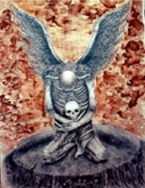
During one of your exhibitions, you compare your works to a virtual journey in the province of Azrael. What does Azrael represent in your paintings?
Azrael is the name of the angel of death—the one who takes the lives of human beings. Throughout Afghanistan’s history, from the reign of Abdur Rahman Khan to the present day, the Hazara people have consistently been the target of massacres and persecution. Under his rule, 63,000 Hazaras were massacred because of their ethnicity, and since then, various groups—such as the Taliban, Daesh-Khorasan, and Al-Qaeda—have continued to commit acts of violence and murder against them. These extremist groups view the Hazaras as «apostates.» In their fanaticism, those they call «infidels» must be exterminated. They see themselves as Azraels sent by God—a violent ideology that seeks to justify cruelty and murder.
I then chose this name in reference to the suffering of the Hazara people in Afghanistan. In Kabul, there was hardly a day that went by without news of a Hazara's death being announced. The attacks continue even today, in other forms. I want to remember this painful history—so that no one forgets that beyond the numbers, there are human lives, with names and stories.
One of your works features a body with the words «accept me» written on it. What does this message represent?
For many, migration represents the last resort to escape violence, war, and discrimination. The hope for a peaceful life becomes a powerful force to leave one's home, even if this decision comes with great difficulties. Migration leaves a deep wound that harbors a part of memory and identity, and which, with each memory, causes the human being to wander between their roots and invisible paths. Exile also includes facing obstacles in host countries. This experience is sometimes so unbearable that young people end their lives. The endless wait for the verdict on my own destiny is one of the heaviest trials of my life—a deep wound, forever open. In our despair, we seek a small light of hope, a sign of a peaceful life, and in silence, we cry out: «Accept us as human beings.»
Do you think art can repair something, within yourself or in the world?
For me, art is an act of memory and resistance. Through my paintings, I try to transform pain into light and silence into voice. Art has the power to reveal what words cannot say. I believe it can mend something, not by erasing wounds, but by giving them meaning. Each painting I create is an attempt at reconciliation with loss, a way to bring back to life what has been destroyed. Within me, art heals memory; and in the world, it can awaken consciences — so that no one remains silent or indifferent in the face of suffering and injustice.
If you could send a message to other young refugee artists, what would it be?
I tell young refugee artists to never lose their hope and passion. Difficult conditions may limit you, but art has the power to convey your pain and hope to the world. Every stroke, every color, and every creation is your voice, which can inspire others. Even in the most challenging situations, art can be a light of hope and a way to change the world.
What is your biggest wish for the future?
My greatest wish is that one day we can live without fear of massacres, expulsion, and returning to a place we fled to survive. I wish that we can live alongside our families in a daily life filled with love and serenity. Finally, I also wish to be able to achieve my dream of becoming an artist.
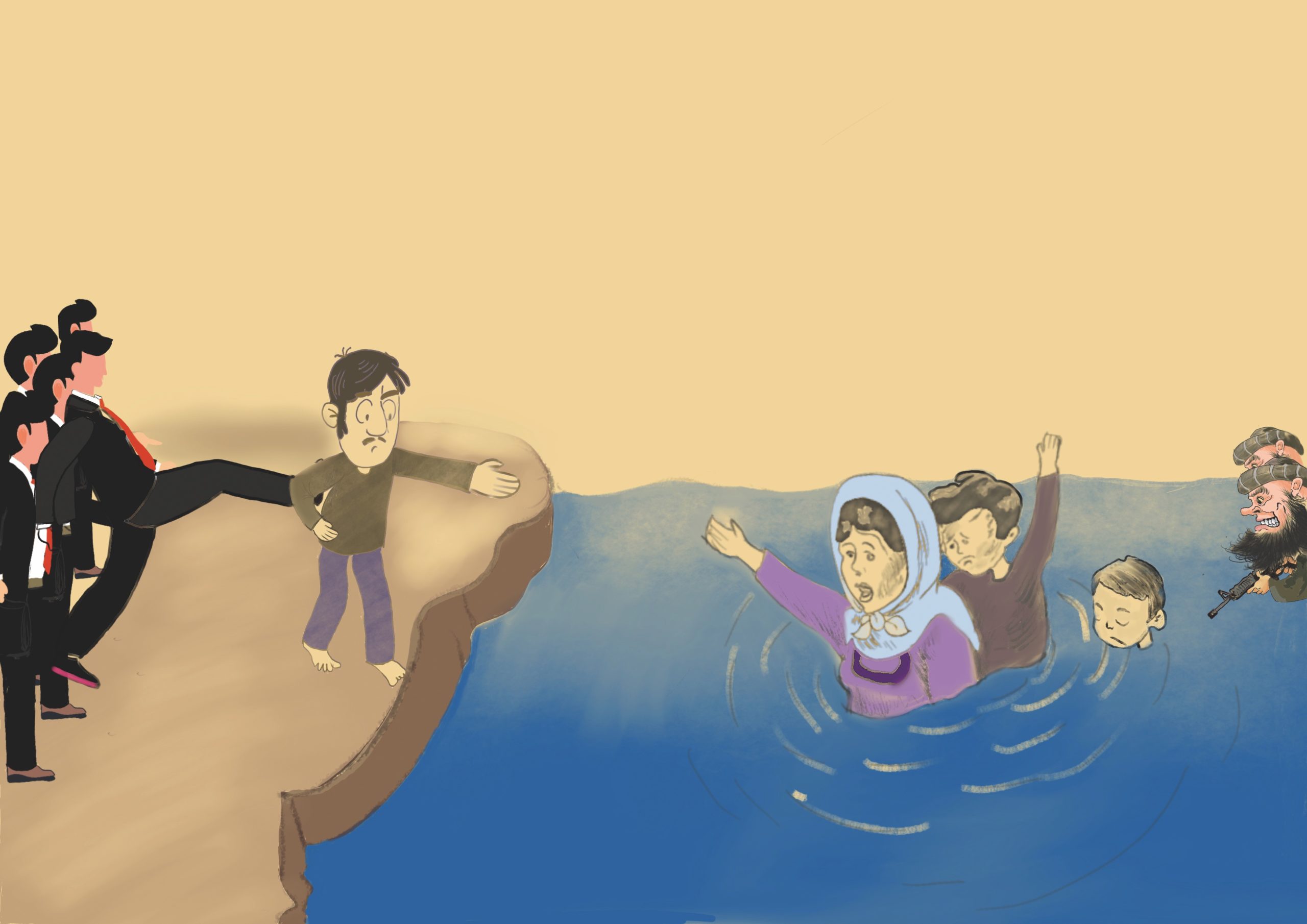
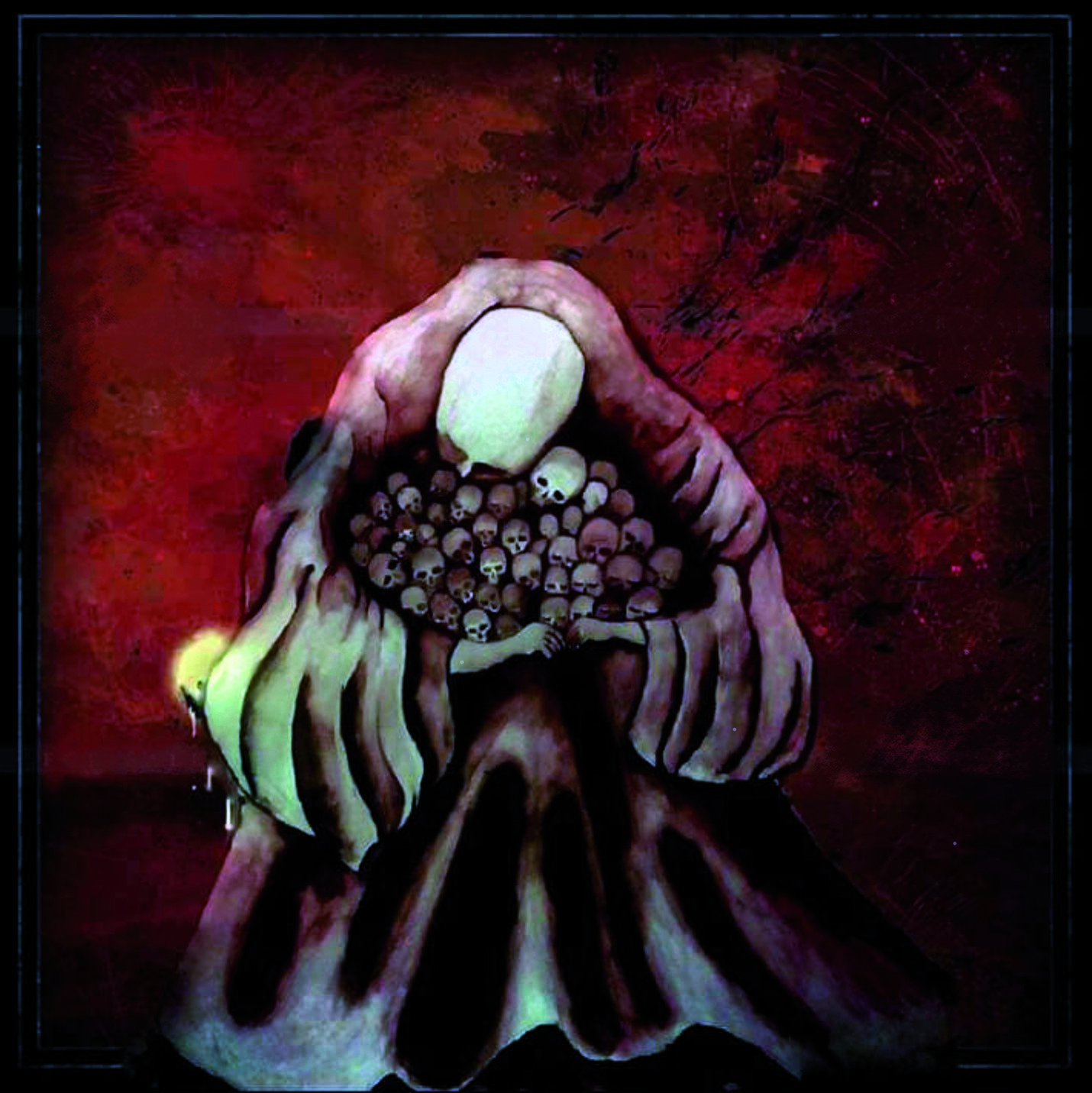
On the occasion of our magazine's 200th issue, a special anniversary edition entirely written by individuals with asylum backgrounds, Murtaza Yousefi shared his journey in a testimonial. rediscover here. He had also brought this edition to life through his illustrations, the works of which are shown here.
The Documentation section shares news and positions from actors in migration and asylum. The published content reflects the opinions of its authors and does not necessarily represent the position of’asile.ch.